KEY LIME PIE, POMEGRANATE & MOLASSES
Origin: Lonya District, Peru | Producer: Roiber Becerra | Variety: Gesha | Process: Natrual | Altitude: 1700 MASL | Harvest: 2025
Few coffee varieties are as synonymous with speciality coffee as Gesha. Its rise to fame began in 2004, when an American producer based in Panama, Price Peterson, entered an unusually “weird” tasting coffee into the Best of Panama auction. That coffee completely stunned the competition and eventually sold for $21 per pound which was an unprecedented price at the time. Since then, Gesha prices have continued to climb, with a recent Best of Panama winning lot selling for an astonishing $10,005 per pound. In many ways, Gesha redefined what elite coffee could be, and the speciality coffee world has never been the same since.
The variety itself originates from the Gori Gesha forest in Ethiopia. It first arrived in Central America in 1953, when seeds were sent to the Centro Agronómico Tropical de Investigación y Enseñanza (CATIE), an agricultural research and education centre in Costa Rica. During the 1960s, the Panamanian government sought to expand coffee production as a major export industry and commissioned a man named Pachi Serracín to collect diverse coffee varieties from around the world. Among the varieties he brought back from CATIE was Gesha.
These new varieties were planted throughout Panama, though many were eventually neglected or abandoned. Then, in the 1990s, Price Peterson decided to expand his family farm, the now world-famous Hacienda Esmeralda. The land they purchased contained several tall, awkward trees that were difficult to work with but the coffee they produced tasted unlike anything they had encountered before. Those trees were Gesha.
Since then, the variety has spread across Central and South America, prized for its extraordinary floral and fruit-driven character. This particular lot was grown in Peru by Roiber Becerra on his farm, Finca Morales, located in the town of Nuevo Belén in the Lonya Grande district. The farm takes its name from the abundance of wild blackberries that grow in the surrounding area. It is a family-run farm with a strong focus not only on producing exceptional coffee, but also on reforestation and conservation. Roiber is especially passionate about Gesha and hopes to dedicate even more of his farm to the variety in the future.
We selected Roiber’s naturally processed Gesha for it’s beautifully expressive profile. The cup is intensely juicy and citrus-forward, with notes of blood orange and ripe stone fruit. It finishes with delicate jasmine-like florals that linger long after the final sip.
KEY LIME PIE, POMEGRANATE & MOLASSES
Origin: Lonya District, Peru | Producer: Roiber Becerra | Variety: Gesha | Process: Natrual | Altitude: 1700 MASL | Harvest: 2025
Few coffee varieties are as synonymous with speciality coffee as Gesha. Its rise to fame began in 2004, when an American producer based in Panama, Price Peterson, entered an unusually “weird” tasting coffee into the Best of Panama auction. That coffee completely stunned the competition and eventually sold for $21 per pound which was an unprecedented price at the time. Since then, Gesha prices have continued to climb, with a recent Best of Panama winning lot selling for an astonishing $10,005 per pound. In many ways, Gesha redefined what elite coffee could be, and the speciality coffee world has never been the same since.
The variety itself originates from the Gori Gesha forest in Ethiopia. It first arrived in Central America in 1953, when seeds were sent to the Centro Agronómico Tropical de Investigación y Enseñanza (CATIE), an agricultural research and education centre in Costa Rica. During the 1960s, the Panamanian government sought to expand coffee production as a major export industry and commissioned a man named Pachi Serracín to collect diverse coffee varieties from around the world. Among the varieties he brought back from CATIE was Gesha.
These new varieties were planted throughout Panama, though many were eventually neglected or abandoned. Then, in the 1990s, Price Peterson decided to expand his family farm, the now world-famous Hacienda Esmeralda. The land they purchased contained several tall, awkward trees that were difficult to work with but the coffee they produced tasted unlike anything they had encountered before. Those trees were Gesha.
Since then, the variety has spread across Central and South America, prized for its extraordinary floral and fruit-driven character. This particular lot was grown in Peru by Roiber Becerra on his farm, Finca Morales, located in the town of Nuevo Belén in the Lonya Grande district. The farm takes its name from the abundance of wild blackberries that grow in the surrounding area. It is a family-run farm with a strong focus not only on producing exceptional coffee, but also on reforestation and conservation. Roiber is especially passionate about Gesha and hopes to dedicate even more of his farm to the variety in the future.
We selected Roiber’s naturally processed Gesha for it’s beautifully expressive profile. The cup is intensely juicy and citrus-forward, with notes of blood orange and ripe stone fruit. It finishes with delicate jasmine-like florals that linger long after the final sip.

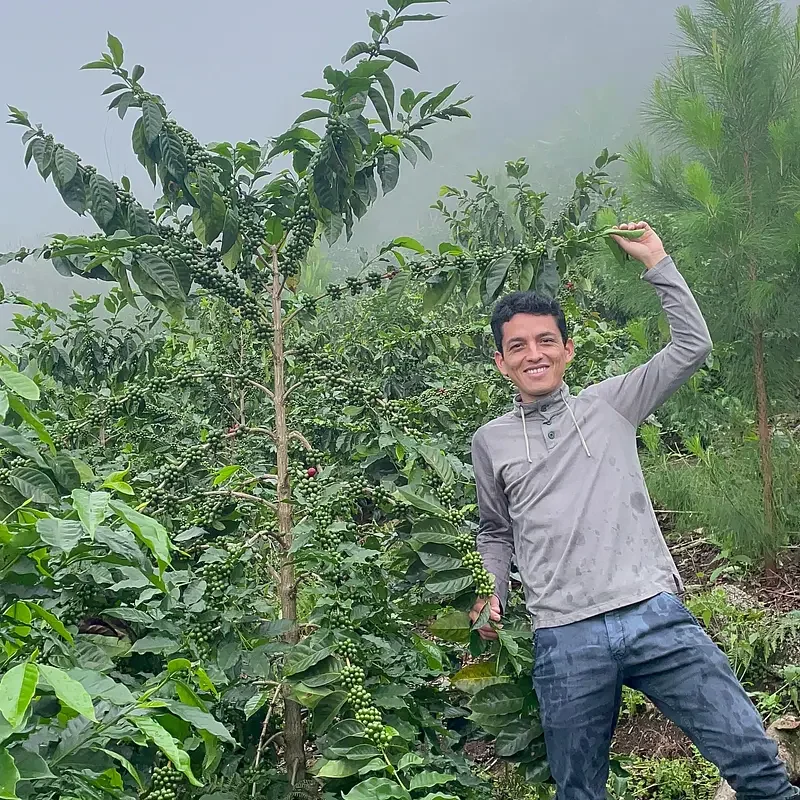 Image 1 of 6
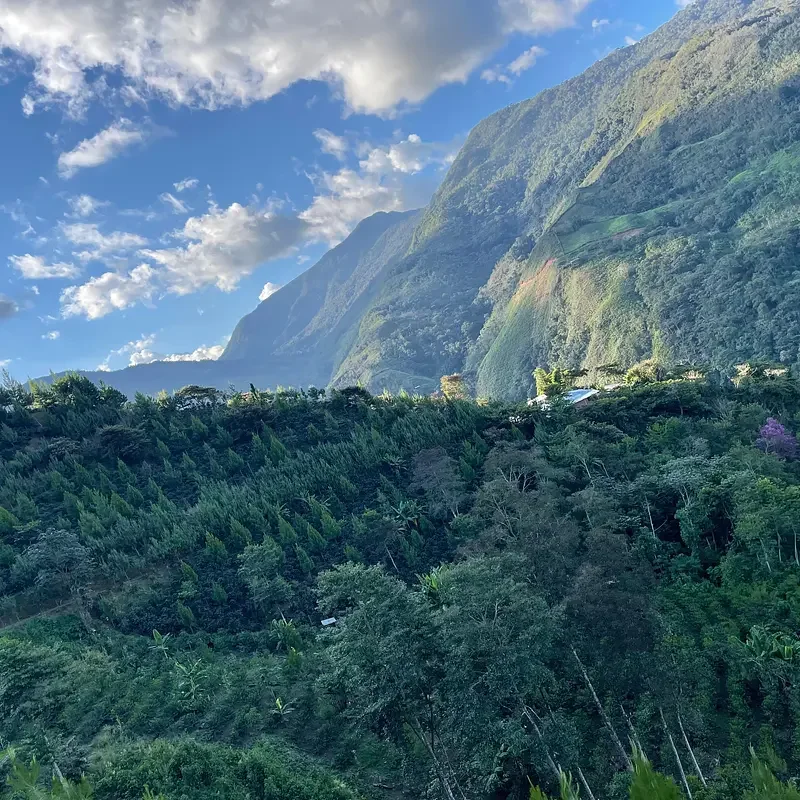 Image 2 of 6
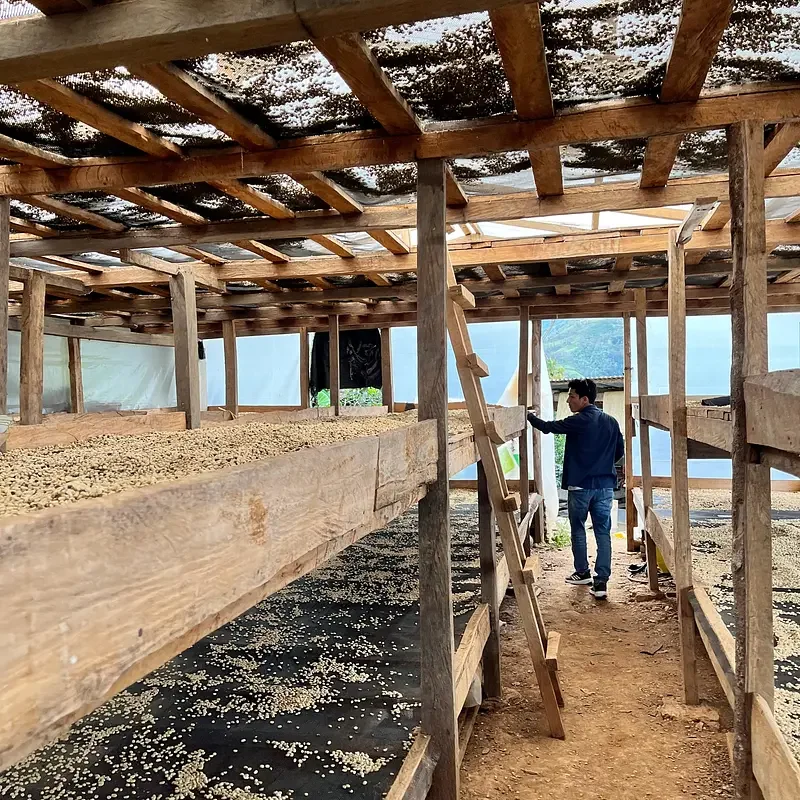 Image 3 of 6
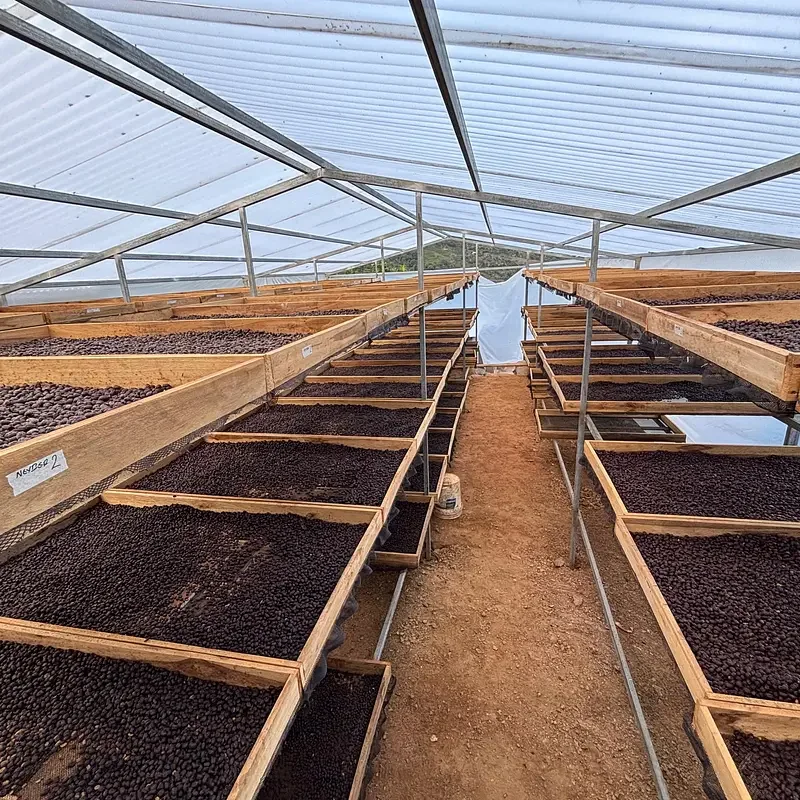 Image 4 of 6
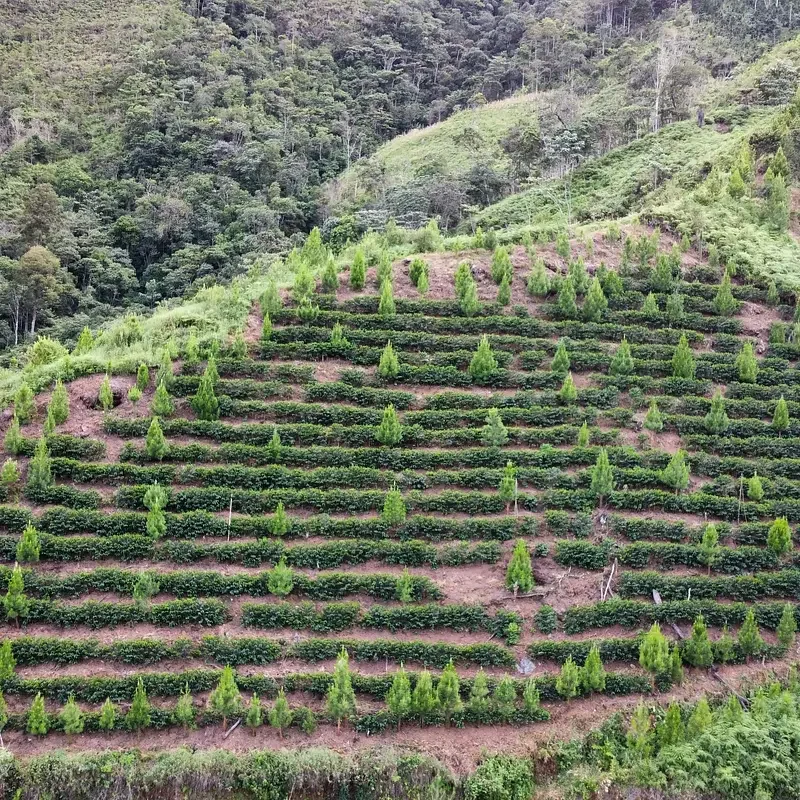 Image 5 of 6
 Image 6 of 6